
Where should you sit during a meeting to be most influential?
t in the middle: This paper examines centrality of physical position as a cue that leads to systematic biases in people’s decisions to retain or eliminate a participant from a group. Termed the “centre- stage” effect, we argue that people use their belief that “important people sit in the middle” as a schematic cue that they substitute for individuating performance information for individuals who occupy central positions when the goal is to eliminate all but one of the group members.…
2 minutes
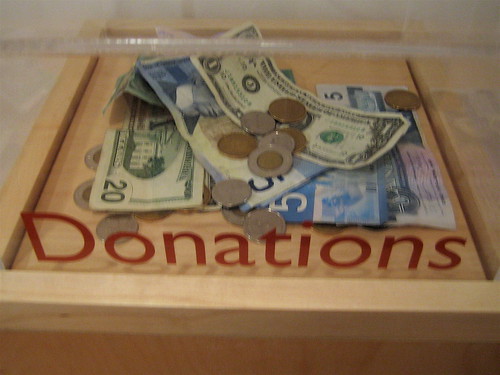
Here’s how you get people to donate money:
e authors find that appeals for charity that evoke personal nostalgia will have an effect on the charitable-donation intentions of consumers. In study 1 with 103 respondents, nostalgic charity appeals evoke higher levels of emotions and donation intentions than non-nostalgic appeals. Study 2 457 respondents indicates that this effect is moderated by the consumer's propensity towards being nostalgic. In study 3 sample: 186 consumers, the effect of nostalgia emotions and intentions is, in turn, moderated by the importance of the…
1 min read
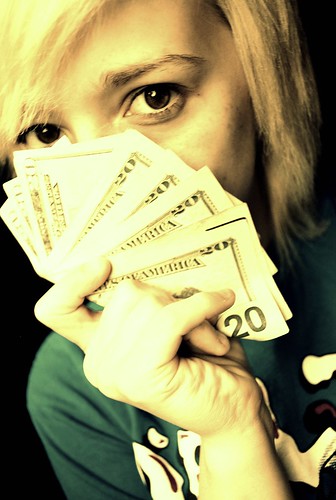
Do blondes raise more funds?
is study uses a door-to-door fund-raising field experiment to explore the returns to physical appearance on fund-raising success. Interestingly, blonde females earn more on average than brunette counterparts. However, the returns to physical appearance depend critically on the race of a potential donor. Source: "Fund-raising success and a solicitor's beauty capital: Do blondes raise more funds?" from Economics Letters. Join over 185,000 readers. Get a free weekly update via email here. Related posts: How To Stop Being Lazy And Get More Done…
1 min read

Is customer satisfaction higher when we buy from attractive salespeople?
is study assesses if the service worker's physical attractiveness has an impact on customer satisfaction in the moment of truth. An experimental approach, involving two different service settings (visiting a bookstore and traveling with an airline), was used to manipulate the level of the service worker's physical attractiveness. The results, for both experiments, show that a high level as opposed to a low level of physical attractiveness of the service worker produced a higher level of customer satisfaction. In addition,…
1 min read
Another simple trick for persuading people:
member their name: Three experiments demonstrate that remembering someone's name facilitates their compliance with a purchase request made by the rememberer. Experiment 1 shows that name remembrance increases request compliance, but name forgetting does not cause a decrease in compliance. Experiments 2 and 3 show that name remembrance is perceived as a compliment by the person remembered, which mediates compliance with the purchase request. Experimental manipulations of the likelihood of name remembrance (experiment 2) and need for self-enhancement (experiment 3)…
1 min read
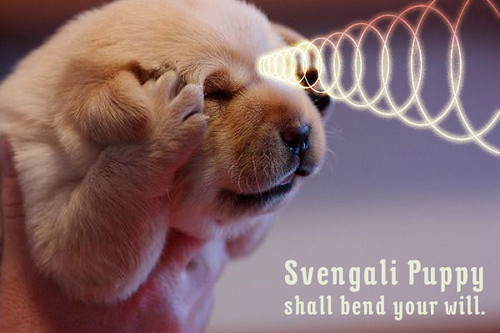
A quick and simple way to influence others:
is study reports the results of three field experiments which demonstrate that asking someone how they feel, having them verbally respond, and then acknowledging that response, facilitates compliance with a charitable request. The findings are discussed with respect to the influence of public commitments on behavioral consistency. Before you ask anyone for a donation, you first ask them how they're feeling. After they tell you they're feeling good, and you tell them you're glad they're feeling good, they'll be more…
1 min read

How to easily appear more powerful:
status expectations affect how we interpret interruption in conversation? Two experiments examined how interrupters and their targets are perceived in same- and mixed-gender dyads. In Experiment 1, participants listened to a brief audiotaped conversation in which one person interrupted the other five times. In Experiment 2, four confederates (two men and two women) systematically interrupted naïve participants while discussing an article. In general, interrupters gained in status and targets of interruption lost status. In addition, participants who were interrupted…
1 min read

Do we think people with beards are more trustworthy?
is research analyses the effects of endorsers' beardedness (i.e., the state of being bearded) on their perceived credibility and consumers' purchase intention for various categories of products. According to Ohanian (1990), credibility is a construct with three sub-dimensions: attractiveness, the degree to which the source's physical appearance and/or its perceived personality is appealing; expertise, the extent to which the communicator is perceived as a source of valid assertions; and trustworthiness, the degree of confidence aroused in perceivers. Recent research has…
2 minutes
