
Would you know a psychopath if you saw one?
is study is the first to demonstrate that features of psychopathy can be reliably and validly detected by lay raters from “thin slices” (i.e., small samples) of behavior. Brief excerpts (5 s, 10 s, and 20 s) from interviews with 96 maximum-security inmates were presented in video or audio form or in both modalities combined. Forty raters used these excerpts to complete assessments of overall psychopathy and its Factor 1 and Factor 2 components, various personality disorders, violence proneness, and…
1 min read
Is it really hunger and tasty food driving you to eat?
is research examines the extent to which people accurately report some of the external influences on their food intake. Design: In two studies, specific factors (the presence and behavior of others) were manipulated in order to influence the amount of food that individuals consumed. Main Outcome Measures: The main outcomes of interest were participants' spontaneously generated explanations for their food intake (Study 1; n = 122), and their ratings of the importance of several potential determinants of food intake (Study…
1 min read
Can which products are next to each other on a store shelf influence what you buy?
is research demonstrates the strong influence of disgust in a consumer context. Specifically, it shows how consumer evaluations may change in response to physical contact with products that elicit only moderate levels of disgust. Using evidence from six studies, the authors develop a theory of product contagion, in which disgusting products are believed to transfer offensive properties through physical contact to other products they touch, thus influencing evaluations. Source: "Product Contagion: Changing Consumer Evaluations Through Physical Contact with “Disgusting” Products"…
1 min read
Thinking Aloud Can Make You Smarter
w studies have examined the impact of age on reactivity to concurrent think-aloud (TA) verbal reports. An initial study with 30 younger and 31 older adults revealed that thinking aloud improves older adult performance on a short form of the Raven's Matrices (Bors & Stokes, 1998, Educational and Psychological Measurement, 58, p. 382) but did not affect other tasks. In the replication experiment, 30 older adults (mean age = 73.0) performed the Raven's Matrices and three other tasks to replicate…
1 min read

If you pig out at Thanksgiving are you less likely to impulse buy on Black Friday?
s. From Science Daily: ...research from two University of Utah marketing professors suggests how eating a traditional Thanksgiving dinner with turkey and mashed potatoes makes consumers less likely to buy on impulse, which might affect the outcome of their shopping on Black Friday, historically one of the busiest retail shopping days of the year... ..."We found that participants who had consumed a traditional Thanksgiving dinner with turkey displayed less willingness to buy deeply discounted products compared to those who did…
2 minutes
Can being happy make you less able to resist temptation?
investigate the interfering influence of elevated arousal on the impact of positive mood on resistance to temptation. Three studies demonstrate that when a temptation activates long‐term health goals, baseline positive mood facilitates resistance to temptation in (1) the choice between two snack items, one of which is more unhealthy, sinful, and hard to resist (M&Ms) than the other (grapes) and (2) the monitoring of consumption when the sinful option is chosen. However, this influence is attenuated when positive mood…
1 min read
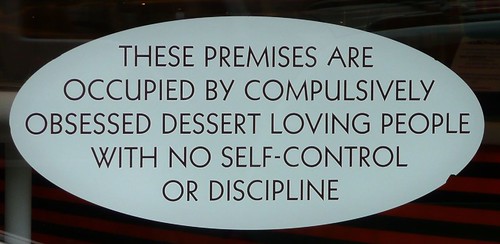
Think you have good self-control? Yes? Now you don’t.
ur studies examined how impulse-control beliefs—beliefs regarding one's ability to regulate visceral impulses, such as hunger, drug craving, and sexual arousal—influence the self-control process. The findings provide evidence for a restraint bias: a tendency for people to overestimate their capacity for impulse control. This biased perception of restraint had important consequences for people's self-control strategies. Inflated impulse-control beliefs led people to overexpose themselves to temptation, thereby promoting impulsive behavior. In Study 4, for example, the impulse-control beliefs of recovering smokers…
1 min read
If your neighbor gets a new car, do you buy a new car?
ch week, the Dutch Postcode Lottery (PCL) randomly selects a postal code, and distributes cash and a new BMW to lottery participants in that code. We study the effects of these shocks on lottery winners and their neighbors. Consistent with the life-cycle hypothesis, the effects on winners’ consumption are largely confined to cars and other durables. Consistent with the theory of in-kind transfers, the vast majority of BMW winners liquidate their BMWs. We do, however, detect substantial social effects of…
1 min read
