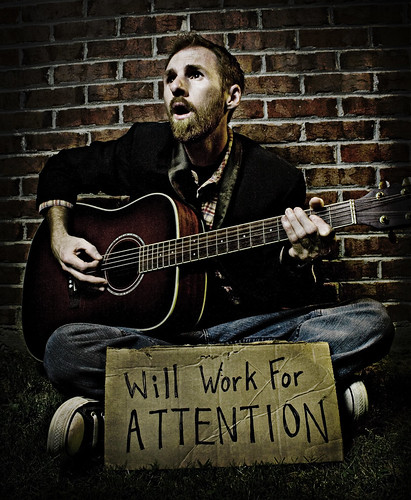
Here’s How You Can Increase Your Attention Span In Just A Few Days
ditate: Recent studies suggest that months to years of intensive and systematic meditation training can improve attention. However, the lengthy training required has made it difficult to use random assignment of participants to conditions to confirm these findings. This article shows that a group randomly assigned to 5 days of meditation practice with the integrative body–mind training method shows significantly better attention and control of stress than a similarly chosen control group given relaxation training. The training method comes from…
1 min read
What’s a quick and easy way to boost cognitive performance?
ink a Red Bull: There has been a dramatic rise in the consumption of glucose energy drinks (e.g., Amp, Monster, and Red Bull) in the past decade, particularly among high school and college students. However, little laboratory research has examined the acute objective and subjective effects of energy drinks. The purpose of this study was to investigate the acute effects of a glucose energy drink (Red Bull) on cognitive functioning. Participants (N = 80) were randomly assigned to one of five…
2 minutes
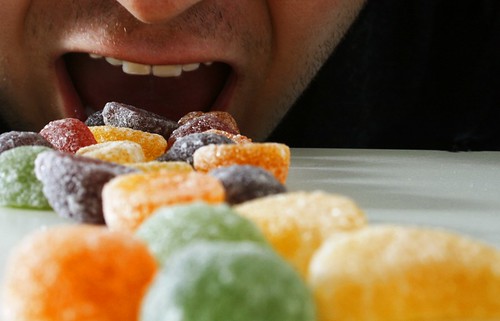
Does your mind play tricks on you when it comes to food?
ian Wansink researches eating behavior at Cornell. In an extended interview he covers a number of the ways context and bias surreptitiously affect our eating decisions: It was all the same $2 cabernet. And we found that if people thought it was from California, they rated the wine as better, they rated the food as better, they stayed at the restaurant about 10 minutes longer, and many of them made reservations to come back. When we served them the North Dakota…
3 minutes

The Simple Thing Will Help You Communicate Better, Learn More And Enhance Problem Solving
sturing when you talk. It can communicate important information when you're speaking: We explored how speakers and listeners use hand gestures as a source of perceptual-motor information during naturalistic communication. After solving the Tower of Hanoi task either with real objects or on a computer, speakers explained the task to listeners. Speakers’ hand gestures, but not their speech, reflected properties of the particular objects and the actions that they had previously used to solve the task. Speakers who solved the…
4 minutes
Are the most romantic gifts expensive and worthless?
at are the characteristics of a good courtship gift? We address this question by modelling courtship as a sequential game. This is structured as follows: the male offers a gift to a female; after observing the gift, the female decides whether or not to accept it; she then chooses whether or not to mate with the male. In one version of the game, based on human courtship, the female is uncertain about whether the male intends to stay or desert…
2 minutes
Does your last name affect how you shop?
..the later in the alphabet the first letter of one’s childhood surname is, the faster the person acquires items as an adult." In addition to deciding whether to buy an item, consumers can often decide when they buy an item. This article links the speed with which adults acquire items to the first letter of their childhood surname. We find that the later in the alphabet the first letter of one’s childhood surname is, the faster the person acquires items…
1 min read

Can you tell if someone is good at their job just by watching them for 6 seconds?
e accuracy of strangers' consensual judgments of personality based on "thin slices" of targets' nonverbal behavior were examined in relation to an ecologically valid criterion variable. In the 1st study, consensual judgments of college teachers' molar nonverbal behavior based on very brief (under 30 sec) silent video clips significantly predicted global end-of-semester student evaluations of teachers. In the 2nd study, similar judgments predicted a principal's ratings of high school teachers. In the 3rd study, ratings of even thinner slices (6…
1 min read

Can you tell if someone is rich by a quick glance?
s. They're the ones who don't seem to be paying attention: Socioeconomic status (SES) is a primary determinant of health vulnerabilities and social affiliations. To ascertain if SES is signaled in brief patterns of nonverbal behavior, we had participants of varying SES backgrounds engage in a brief interaction with a stranger. Videos of 60-s slices of these interactions were coded for nonverbal cues of disengagement and engagement, and estimates of participants' SES were provided by naive observers who viewed these…
1 min read
