
Does doodling actually increase your ability to pay attention?
ve posted before about the positives and negatives of daydreaming. Looks like doodling may increase your ability to pay attention when your mind is tempted to wander: Via The Science of Sin: The Psychology of the Seven Deadlies (and Why They Are So Good For You): Now, we know that mind-wandering can hamper memory performance on such tests. Does doodling offer some protection against this? The results of Andrade’s study: doodlers recalled 29 percent more information than nondoodlers did. Precisely…
1 min read
How To Increase Willpower: 10 Secrets From Research
me insights about willpower from research, with links to the studies: Practicing a little willpower every day increases self-control over time. For immediate results: tighten your muscles, sit up straight or cross your arms. Or just think about money. Get enough sleep and don't miss meals. More shut-eye will stop you from wasting time on the internet. Skipping breakfast can lead to murder. Context is key. Those around you exert more influence on your behavior than you think. Don't get cocky. Thinking…
1 min read
This Is The Quickest Way To Become An Expert Negotiator
nice. We often associate negotiation with being tough or manipulative. While there are certainly situations where that's the case, a great deal of the recent research says we can improve our results by thinking more about making friends than waging war. A great deal of what it takes to influence others, gain their compliance and lead successful negotiations is just good advice on how to be a decent person. Be warm. We value warmth more than competence. Happy people…
2 minutes

Is not doing something the most important thing to do today?
ercising self-control in one area of life tends to improve all areas of life. From Willpower: Resdiscovering the Greatest Human Strength: Those in the fitness program got fitter; those working on study discipline got more schoolwork done; the people in the money-management program saved more money. But—and here was a truly pleasant surprise—they also got better at other things. The students who did the study-discipline program reported doing physical workouts a bit more often and cutting down on impulsive spending.…
2 minutes

This Is Why First Impressions Can Be Dangerous
can become a slave to our first impressions. Once we've set them, they can be hard to change. Via David McRaney's You Are Not So Smart: A study in 1997 by Wilkielman, Zajonc, and Shwartz created first impressions in subjects with images of smiles and frowns. The people in the study saw a photo of either a happy or a sad face flash briefly on a screen and then were shown an unfamiliar Chinese character and asked to say…
1 min read

How can you figure out what your real long term goals are?
sualize your funeral and consider what you would want friends to describe as your legacy. Via Richard Wiseman's excellent book 59 Seconds: Change Your Life in Under a Minute: Asking people to spend just a minute imagining a close friend standing up at their funeral and reflecting on their personal and professional legacy helps them to identify their long-term goals and assess the degree to which they are progressing toward making those goals a reality. Join over 200,000 readers. Get a free…
1 min read

What should you think about to immediately increase self-control?
ink about money: Self-control draws upon a resource that is limited, such that acts of self-control deplete the resource, causing performance on subsequent acts of self-control to suffer. In this research, we demonstrate that activating the concept of money can buffer this ego depletion effect. Across two experiments using varied operationalizations of self-control, participants completed an initial task that depleted self-control resources or not, were then reminded of money or neutral concepts, and finally, completed a second task requiring self-control.…
1 min read
Is postponement the key to resisting temptation?
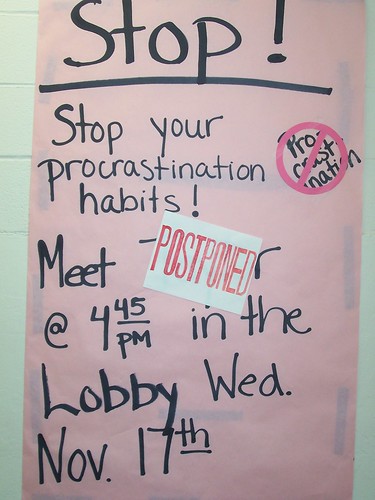
lling yourself "Not now, but later" is far more powerful than "No, you can't have that." From Willpower: Resdiscovering the Greatest Human Strength: ...people who had told themselves Not now, but later were less troubled with visions of chocolate cake than the other two groups... And: Those in the postponement condition actually ate significantly less than those in the self-denial condition...The result suggests that telling yourself I can have this later operates in the mind a bit like having it…
2 minutes
