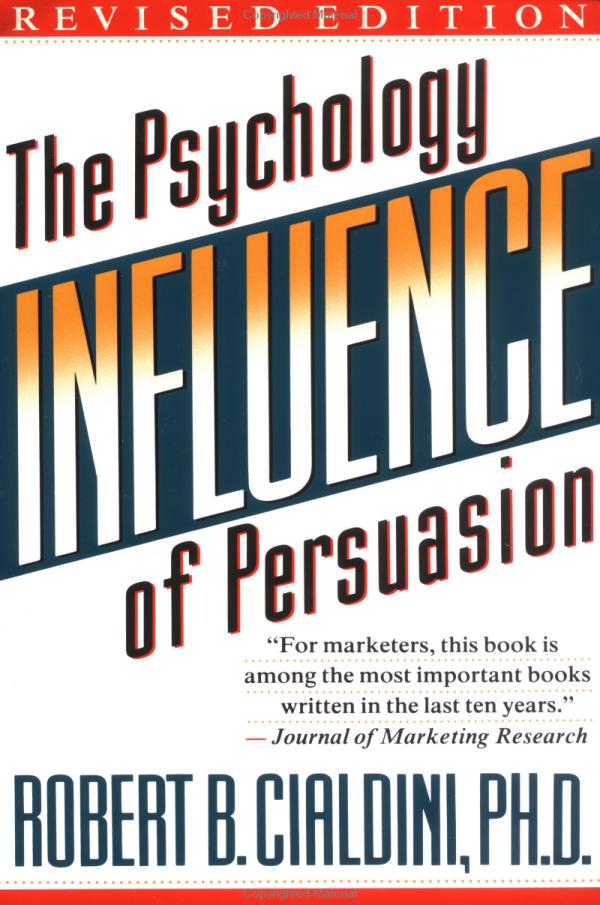
Robert Cialdini explains the six ways to influence people – Interview:
. Robert Cialdini Dr. Robert Cialdini is the authority on the study of persuasion. His classic book, "Influence" has sold millions of copies and is widely regarded as the go-to text on the subject. What makes the book so special is it's not just a collection of academic studies on college students. Bob went "undercover" to learn the secrets of used car salesmen, marketing professionals, telemarketers, and others who influence in order to survive. He distilled his findings down to…
7 minutes
What’s the best way to influence others?
k for advice. Via Adam Grant's excellent Give and Take: A Revolutionary Approach to Success: New research shows that advice seeking is a surprisingly effective strategy for exercising influence when we lack authority. In one experiment, researcher Katie Liljenquist had people negotiate the possible sale of commercial property. When the sellers focused on their goal of getting the highest possible price, only 8 percent reached a successful agreement. When the sellers asked the buyers for advice on how to meet their…
2 minutes
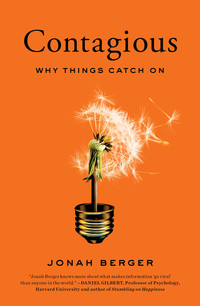
What are the six steps to making your ideas contagious?
bsp; In his book Contagious: Why Things Catch On, Wharton business school professor Jonah Berger lays out the six key elements that make ideas and products catch on: 1) Social Currency: "We Share Things That Make Us Look Good" "Does talking about your product or idea make people look good? Can you find the inner remarkability? Leverage game mechanics? Make people feel like insiders?" 2) Triggers: "Top of Mind, Tip of Tongue" "Consider the context. What cues make people…
2 minutes

Interview – Harvard/MIT Lecturer Olivia Fox Cabane teaches you how to be more charismatic
ivia Fox Cabane is the author of The Charisma Myth. She's lectured on the subject at Harvard, Stanford, Yale, MIT, Google and the United Nations. I spoke with her about how charisma works, the science behind it and how anyone can become more influential. For brevity’s sake I’m only going to post edited highlights here. Subscribers to my free weekly newsletter get access to extended interviews. Join here. ——————————————— How does charisma work? Eric: In The Charisma Myth you break down charisma into presence, power,…
4 minutes
Should you “fake it until you make it”?
u like confidence. In fact, most of us have such a bias toward confidence we prefer it over actual expertise. Speaking first, speaking confidently and speaking often make you sound like a leader and the people who do that usually end up as the leader -- even if they don't know what they're talking about: Via The Invisible Gorilla: How Our Intuitions Deceive Us: As you’ve probably anticipated, in the actual experiment, the group leaders proved to be no more competent than anyone…
3 minutes
Checklist: Are you doing these 5 things to be more charismatic?
arisma makes a difference. It doesn't just make us like people more, charismatic leaders bring out our best and make us do better work. Via The Charisma Myth: How Anyone Can Master the Art and Science of Personal Magnetism: Research shows that those following charismatic leaders perform better, experience their work as more meaningful, and have more trust in their leaders than those following effective but noncharismatic leaders. As Wharton School business professor Robert House notes, charismatic leaders “cause followers to…
4 minutes

Here’s The Secret To Communicating With Irrational, Angry Or Crazy People
all have to deal with our share of hotheads and crazies. What does research say works with them? First off, you can't get angry too. Because then there are two crazy people arguing. While very entertaining to onlookers, this doesn't accomplish much. Tell yourself they are having a bad day and that it’s not about you: Telling yourself that an angry person is just having a bad day and that it’s not about you can help take the sting…
4 minutes
10 Videos Guaranteed To Inspire You
bsp; 1) How to be happier Harvard professor Shawn Achor is the author of the wonderful book The Happiness Advantage. 2) Is it better to come in first... or third? Malcolm Gladwell is the author of the bestsellers Blink, Outliers and The Tipping Point. 3) Why do we lie? And why do we lie to ourselves? Great interview with Dan Ariely, author of Predictably Irrational and The Honest Truth About Dishonesty: How We Lie to Everyone---Especially Ourselves. 4) What’s it take to free…
2 minutes
