
What personality types are more likely to stay unemployed?
is paper focuses on the role personality traits play in determining individual unemployment duration. We argue that a worker’s job search intensity is decisively driven by her personality traits, reflected in her propensity to motivate and control herself while searching for a job. Moreover, personality traits, in as far as they can be signaled to a potential employer, may also enhance the probability of receiving and accepting a job offer. For our econometric duration analysis, we use the well-accepted taxonomy…
1 min read

Another way to improve your persuasion skills:
ke sure your body language matches your verbal strategy: How can we be more successful in persuading others and increase the odds of behavioral compliance? We argue that when a verbal influence strategy is embedded in a nonverbal style that fits its orientation, this boosts the strategy's effectiveness, whereas a misfit attenuates its impact. In field-experiment 1, agents tried to persuade participants in buying a candybox by using an approach-oriented strategy (Door-In-The-Face, DITF). An eager nonverbal style increased the impact…
1 min read

Does lack of sleep make us unethical?
draw from the Ego Depletion model and research on sleep physiology to predict a relationship between lack of sleep and individuals’ unethical behavior. Laboratory studies showed that sleep quantity is positively related to self-control resources and negative associated with unethical behavior. In a cross-sectional field study examining unethical behavior in a variety of work settings, low levels of sleep, and low perceived quality of sleep, were both positively related to unethical behavior as rated by the supervisor, and cognitive…
1 min read
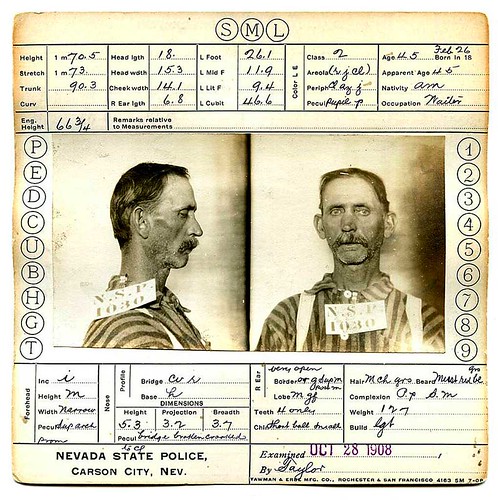
Can you tell who is a criminal just by looking at their face?
growing body of evidence suggests that rapid, yet accurate, dispositional inferences can be made after minimal exposure to the physical appearance of others. In this study, we explore the accuracy of inferences regarding criminality made after brief exposure to static images of convicted criminals’ and non-criminals’ faces. We begin with a background of research and theory on the curiously recurrent, and historically controversial, topic of appearance-based inferences of criminality, and a brief justification of our re-opening of the debate…
1 min read
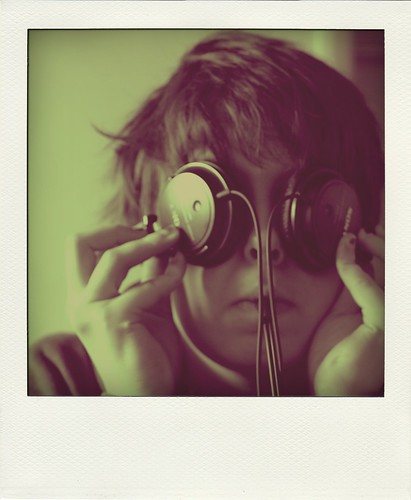
Can music lessons raise IQ?
e idea that music makes you smarter has received considerable attention from scholars and the media. The present report is the first to test this hypothesis directly with random assignment of a large sample of children (N = 144) to two different types of music lessons (keyboard or voice) or to control groups that received drama lessons or no lessons. IQ was measured before and after the lessons. Compared with children in the control groups, children in the music groups…
1 min read

Do stores trick you into buying more by stocking less?
elf-based scarcity in the form of relative stocking level depletion significantly affects consumer preferences (van Herpen et al. 2009). While both popularity and quality inferences are induced by stocking-level depletion, this paper demonstrates that popularity (rather than quality) inferences are the primary driver of the effect. Shelf-based scarcity is shown to have an impact in the presence of other signals, such as brand names and quality ratings, which indicates its effect may be widespread. However, its effect on preferences is…
1 min read

Is there a way to quickly and easily make people be more kind and ethical?
ople are nicer after recalling memories from their childhood: Four experiments demonstrated that recalling memories from one's own childhood lead people to experience feelings of moral purity and to behave prosocially. In Experiment 1, participants instructed to recall memories from their childhood were more likely to help the experimenter with a supplementary task than were participants in a control condition, and this effect was mediated by self-reported feelings of moral purity. In Experiment 2, the same manipulation increased the amount…
1 min read
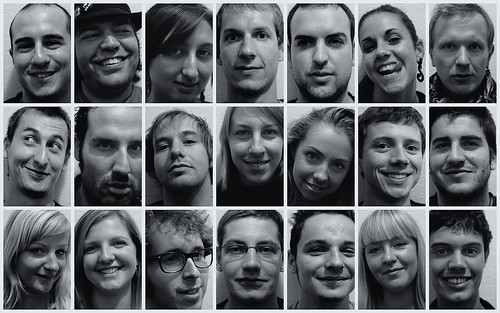
Another way to be more creative:
ke friends with people from other cultures: This research examines the effects of multicultural social networks on individuals’ creative performance. Combining network analysis with experimental methods, two studies using different samples found that networks’ degree of cultural heterogeneity positively predicts creativity on tasks that draw on varied cultural-knowledge resources but not on other tasks. The results also indicate that a culturally heterogeneous network increases the likelihood of receiving culture-related novel ideas from others in the network whether or not they…
1 min read
