
Are you more likely to cave to weak temptations than powerful ones?
is series of studies examined the effect of temptation strength on self-regulation processes in the context of eating behavior. Based on the critical level model, it was hypothesized that weak, rather than strong, temptations yield the most unfavorable conditions for effective self-regulation, because the negative consequences of the former are underestimated. In line with the assumptions of this model, Studies 1 and 2 showed that weak temptations inhibited the mental accessibility of the weight watching goal, in contrast to strong…
1 min read
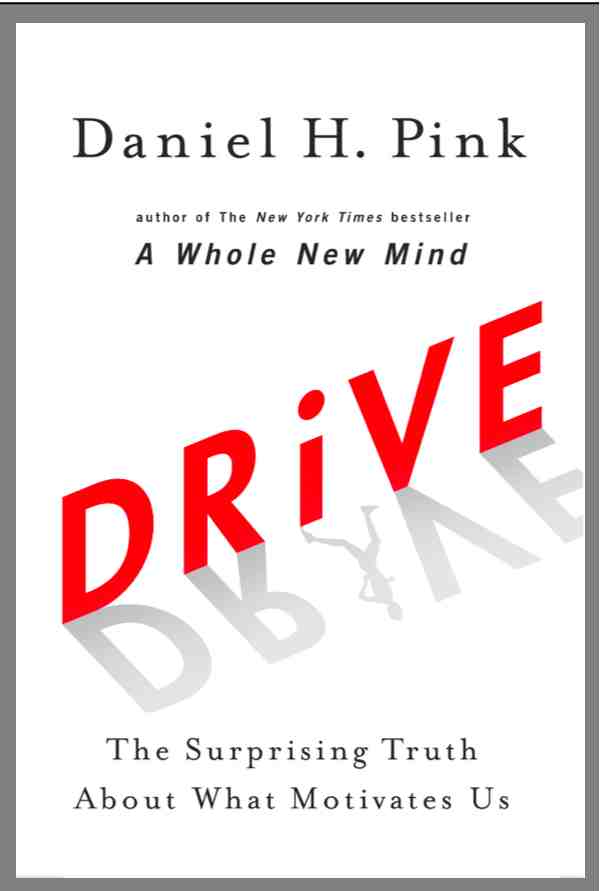
Here’s What Really Motivates You
learned a lot from Daniel Pink's Drive: The Surprising Truth About What Motivates Us. For any job that requires thought, creativity or problem-solving, Pink doesn't recommend a focus on concrete rewards and punishments. He feels there are three elements we must provide to workers in this category: (1) Autonomy—"the desire to direct our own lives;" (2) Mastery—"the urge to make progress and get better at something that matters; and" (3) Purpose—"the yearning to do what we do in the…
5 minutes

Is posture the key to power?
a Science Daily: According to new research from the Kellogg School of Management at Northwestern University, posture plays an important role in determining whether people act as though they are really in charge. The research finds that "posture expansiveness," or positioning oneself in a way that opens up the body and takes up space, activates a sense of power that produces behavioral changes in a person independent of their actual rank or hierarchical role in an organization. And: Although not…
1 min read

What can I predict about your future just by looking at your smile?
few years ago, Dacher Keltner and LeeAnne Harker, from the University of California at Berkeley, looked at the photographs of the women that had been taken for the college yearbook when they were in their early twenties. Nearly all the women were smiling. However, when the researchers carefully examined the images, they noticed that about half of the photographs showed a Pan Am smile and half a genuine Duchenne smile. They then went back to the information that had…
1 min read

Should you pursue mastery or focus on outdoing others?
e current article presents an overview of recent research into social outcomes that accompany the pursuit of achievement goals. On the basis of investigations in various subdisciplines of psychology, we conclude that mastery goals—striving to improve one’s own performance—lead to investments in exchange relationships, endorsement of reciprocity norms, and active efforts to integrate different opinions. In contrast, performance goals—striving to outperform others—may result in rather maladaptive social behaviors. We point to three promising avenues for future research: Social consequences of…
2 minutes

Can being underpaid give you a heart attack?
is paper investigates physiological responses to perceptions of unfair pay. In a simple principal agent experiment agents produce revenue by working on a tedious task. Principals decide how this revenue is allocated between themselves and their agents. In this environment unfairness can arise if an agent’s reward expectation is not met. Throughout the experiment we record agents’ heart rate variability. Our findings provide evidence of a link between perceived unfairness and heart rate variability. The latter is an indicator of stress related impaired cardiac autonomic…
1 min read

Are our snap decisions more ethical?
veral theories, both ancient and recent, suggest that having the time to contemplate a decision should increase moral awareness and the likelihood of ethical choices. Our findings indicated just the opposite: greater time for deliberation led to less ethical decisions. Post-hoc analyses and a followup experiment suggested that decision makers act as if their previous choices have created or lost moral credentials: after an ethical first choice, people acted significantly less ethically in their subsequent choice but after an unethical…
1 min read

What’s a quick and easy way to improve learning?
e gestures children spontaneously produce when explaining a task predict whether they will subsequently learn that task. Why Gesture might simply reflect a child’s readiness to learn a particular task. Alternatively, gesture might itself play a role in learning the task. To investigate these alternatives, we experimentally manipulated children’s gesture during instruction in a new mathematical concept. We found that requiring children to gesture while learning the new concept helped them retain the knowledge they had gained during instruction. In…
1 min read
