
Does humor mentally disarm us?
is article explores humor's impact on cognitive processing of political messages. Although recent research has pointed to effects of late-night comedy viewing on political attitudes and cognitions (Moy, Xenos, & Hess, 2003; Young, 2004, 2006), scant attention has been paid to the development of a theoretical model to account for these outcomes. This manuscript posits that humor suspends argument scrutiny of the premise of a given text through various cognitive mechanisms involving processing ability and motivation. Four different pathways accounting…
1 min read
Another way to improve your persuasion skills:
ke sure your body language matches your verbal strategy: How can we be more successful in persuading others and increase the odds of behavioral compliance? We argue that when a verbal influence strategy is embedded in a nonverbal style that fits its orientation, this boosts the strategy's effectiveness, whereas a misfit attenuates its impact. In field-experiment 1, agents tried to persuade participants in buying a candybox by using an approach-oriented strategy (Door-In-The-Face, DITF). An eager nonverbal style increased the impact…
1 min read

Does lack of sleep make us unethical?
draw from the Ego Depletion model and research on sleep physiology to predict a relationship between lack of sleep and individuals’ unethical behavior. Laboratory studies showed that sleep quantity is positively related to self-control resources and negative associated with unethical behavior. In a cross-sectional field study examining unethical behavior in a variety of work settings, low levels of sleep, and low perceived quality of sleep, were both positively related to unethical behavior as rated by the supervisor, and cognitive…
1 min read

Is there a way to quickly and easily make people be more kind and ethical?
ople are nicer after recalling memories from their childhood: Four experiments demonstrated that recalling memories from one's own childhood lead people to experience feelings of moral purity and to behave prosocially. In Experiment 1, participants instructed to recall memories from their childhood were more likely to help the experimenter with a supplementary task than were participants in a control condition, and this effect was mediated by self-reported feelings of moral purity. In Experiment 2, the same manipulation increased the amount…
1 min read
Do companies pay women more if a male CEO has a daughter?
men's salaries are higher when the boss has a daughter Drawing on research in sociology and economics suggesting that fathers' gender-related attitudes and behaviors are shaped by the gender of their children, we hypothesize that having daughters prompts male CEOs to implement wage policies that are more equitable to female employees. To test this hypothesis, we use a 12-year panel of Danish workforce data and an empirical specification with CEO–employee fixed effects, creating a quasiexperimental setting whereby the gender of…
1 min read

Is there a connection between posture and power?
ree experiments explored whether hierarchical role and body posture have independent or interactive effects on the main outcomes associated with power: action in behavior and abstraction in thought. Although past research has found that being in a powerful role and adopting an expansive body posture can each enhance a sense of power, two experiments showed that when individuals were placed in high- or low-power roles while adopting an expansive or constricted posture, only posture affected the implicit activation of power,…
1 min read
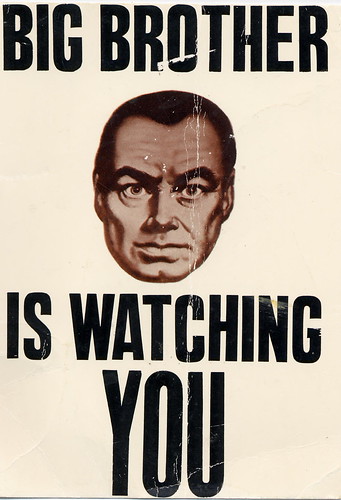
Is getting people to behave better a matter of what pictures you hang on the wall?
examined the effect of an image of a pair of eyes on contributions to an honesty box used to collect money for drinks in a university coffee room. People paid nearly three times as much for their drinks when eyes were displayed rather than a control image. This finding provides the first evidence from a naturalistic setting of the importance of cues of being watched, and hence reputational concerns, on human cooperative behaviour. Source: "Cues of being watched enhance…
1 min read
Does repeating yourself make you more influential?
spite the importance of doing so, people do not always correctly estimate the distribution of opinions within their group. One important mechanism underlying such misjudgments is people's tendency to infer that a familiar opinion is a prevalent one, even when its familiarity derives solely from the repeated expression of 1 group member. Six experiments demonstrate this effect and show that it holds even when perceivers are consciously aware that the opinions come from 1 speaker. The results also indicate that…
1 min read
