
Should you be as nice as humanly possible to your doctor?
ctors take pain more seriously when they like the patient: This study examined the influence of patients’ likability on pain estimations made by observers. Patients’ likability was manipulated by means of an evaluative conditioning procedure: pictures of patients were combined with either positive, neutral, or negative personal traits. Next, videos of the patients were presented to 40 observers who rated the pain. Patients were expressing no, mild-, or high-intensity pain. Results indicated lower pain estimations as well as lower perceptual…
1 min read
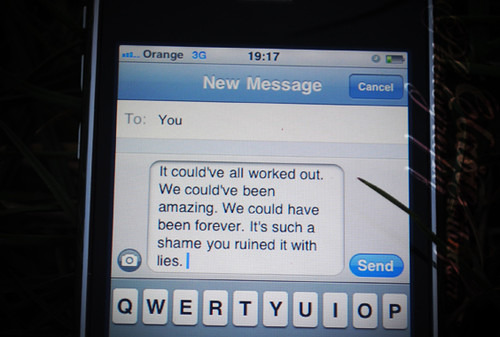
Who do we tell the most lies to? How do we tell them?
tell the most lies to the people we feel closest to. An online diary study was performed to investigate deception across different media. One hundred and four individuals participated in the study, with 76 completing the diaries. Individuals were most likely to lie on the telephone. Planned lies, which participants also rated the most serious, were more likely told via SMS (short message service) text messaging. Most lies were told to people participants felt closest to. The feature-based model…
1 min read

Does it matter what a doctor wears?
solutely. People trust doctors more when they wear that white coat: Purpose There are very few studies about the impact of physicians’ attire on patients’ confidence and trust. The objective of this study was to determine whether the way a doctor dresses is an important factor in the degree of trust and confidence among respondents. Methods A cross-sectional descriptive study using survey methodology was conducted of patients and visitors in the waiting room of an internal medicine outpatient clinic. Respondents…
2 minutes

How powerful is an apology?
eap-talk apologies to angry customers produce better results than offering money: How should firms react to customer complaints after an unsatisfactory purchase? In a field experiment, we test the effect of different reactions and find that a cheap-talk apology yields significantly better outcomes for the firm than offering a monetary compensation. Source: "The power of apology" from Economics Letters, Volume 107, Issue 2, May 2010, Pages 233-235 Join over 185,000 readers. Get a free weekly update via email here. Related posts: How To Stop…
1 min read
Does happiness or sadness make us better negotiators?
their version, before beginning the game, Lount and Murnighan asked some trustors to write about an experience that made them happy and asked other trustors to write about an experience that made them sad. They then played the trust game. Among “happy” trustors, 53% gave recipients the full $10; only 21% of “sad” trustors did the same. On average, happy trustors gave away $6.76, and sad trustors gave away $5.58. It appears that a sad mood decreases trust and…
1 min read

What’s an easy way to get others to agree to help you out?
monstrate that the two of you have something in common: Four studies examined the effect of an incidental similarity on compliance to a request. Undergraduates who believed they shared a birthday (Study 1), a first name (Study 2), or fingerprint similarities (Study 3) with a requester were more likely to comply with a request than participants who did not perceive an incidental similarity with the requester. The findings are consistent with past research demonstrating that people often rely on heuristic…
1 min read

What 7 negotiating tricks can we learn from FBI hostage negotiators?
ry Noesner, former chief negotiator with the FBI's Critical Incident Response Group and author of Stalling for Time: My Life as an FBI Hostage Negotiator wrote an interesting piece on active listening skills. You don't need to be dealing with barricaded gunmen to improve your communication skills with the techniques he describes. In the early part of any negotiation, information exchange and building rapport are key. These are some of the most powerful and tested techniques available to achieve those goals: …
4 minutes

Here’s the best way to apologize
n't apologize for what you think you did wrong. Apologize for what they think you did wrong: Apologies are useful social tools that can act as catalysts in the resolution of conflict and inspire forgiveness. Yet as numerous real-world blunders attest, apologies are not always effective. Whereas many lead to forgiveness and reconciliation, others simply fall on deaf ears. Despite the fact that apologies differ in their effectiveness, most research has focused on apologies as dichotomous phenomena wherein a victim…
1 min read
