
Do you underestimate the power of touching?
a the New York Times: Studies show touching has the power to encourage, reduce pain and communicate: Students who received a supportive touch on the back or arm from a teacher were nearly twice as likely to volunteer in class as those who did not, studies have found. A sympathetic touch from a doctor leaves people with the impression that the visit lasted twice as long, compared with estimates from people who were untouched. Research by Tiffany Field of the…
2 minutes
What tricks do stores use to get us to buy?
is is from an interview with Lee Eisenberg, author of Shoptimism: Why the American Consumer Will Keep on Buying No Matter What. Join over 190,000 readers. Get a free weekly update via email here. Related posts: How To Stop Being Lazy And Get More Done – 5 Expert Tips How To Get People To Like You: 7 Ways From An FBI Behavior Expert New Harvard Research Reveals A Fun Way To Be More Successful
1 min read
How can you fool people into thinking you like that awful gift they gave you?
th 75% of people being able to correctly identify whether or not a recipient liked the gift they received, how can we better fool people (and spare their feelings)? Make eye contact. Smile with your mouth and eyes, not just your mouth. Don't put the gift aside. Lift it like a trophy and show it off. From Humintell: What do you say when you receive a gift you are not too fond of? Eye contact, or lack thereof, is one…
2 minutes

Can computers teach us everything we need to know about cooperation?
ve posted before about Robert Axelrod's research on cooperation; computers were assigned different strategies in the famous prisoner's dilemma and for thousands upon thousands of rounds they faced each other to see which method led to the most success. The best strategy by far turned out to be one we're all familiar with: tit-for-tat. In chapter six of his book, The Evolution of Cooperation, Axelrod explains how we can translate the findings of these computer tournaments into advice that's useful…
3 minutes

Does guilting people really work?
minding people of their transgressions causes them to improve their behavior: People’s desires to see themselves as moral actors can contribute to their striving for and achievement of a sense of self-completeness. The authors use self-completion theory to predict (and show) that recalling one’s own (im)moral behavior leads to compensatory rather than consistent moral action as a way of completing the moral self. In three studies, people who recalled their immoral behavior reported greater participation in moral activities (Study 1),…
1 min read
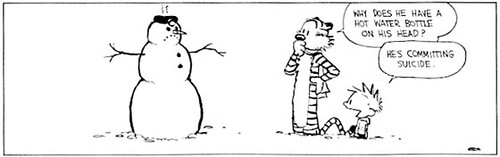
Can humor make you a better negotiator?
eve J. Martin, author of Yes!: 50 Scientifically Proven Ways to Be Persuasive, reviews a study showing it can: In one study, businesspeople were asked to negotiate on a specific and complex contract via email. Half the group were paired up and simply asked to get down to business. The other half were paired up and one side was given a funny (and inoffensive) cartoon about negotiation. That person was instructed to send the cartoon to the person they were…
2 minutes

What notably reduces pain? (Hint: you might already do it.)
earing. Via Time Magazine: In a previous study, psychologist Richard Stephens at Keele University in the U.K. and colleagues found that people who were asked to dunk their hand in ice-cold water were better able to tolerate the pain — and they left their hands in the buckets for a full 40 seconds longer — if they were allowed to swear, compared with people who were asked to utter a non-curse word. In the new study, Stephens repeated the previous…
2 minutes

What’s a good trick for outsmarting liars?
king them unexpected questions dramatically raises the chance you'll be able to detect their lies: We hypothesised that the responses of pairs of liars would correspond less with each other than would responses of pairs of truth tellers, but only when the responses are given to unanticipated questions. Liars and truth tellers were interviewed individually about having had lunch together in a restaurant. The interviewer asked typical opening questions which we expected the liars to anticipate, followed by questions about…
1 min read
