
Fast, easy tricks to avoid spending too much while shopping:
N has an excellent piece that distills research from behavioral economics and cognitive biases to help us avoid overspending. My takeaways are: Buying a lot in one store can decrease your sensitivity to the pain of cost, says Loewenstein. "You hit the what-the-heck effect: You've spent $200; what's another $20 for a T-shirt?" He recommends going to various stores for different purchases. We overreact to discounts: "Even psychologists confess that they've been seduced." The anticipation of getting a good deal,…
2 minutes

How to easily increase your willpower:
st a little bit of practice every day: Self-control performance may be improved by the regular practice of small acts of self-control. Ninety-two adults’ self-control capacity was assessed using the stop signal paradigm before they started practicing self-control and again at the end of 2 weeks. Participants who practiced self-control by cutting back on sweets or squeezing a handgrip exhibited significant improvement in stop signal performance relative to those who practiced tasks that did not require self-control. Participants who did not practice…
1 min read

Can one product catch “cooties” from another?
a Science Daily: ...ordinary products that can evoke feelings of disgust in consumers include trash bags, cat litter, diapers, cigarettes, mayonnaise and shortening. "Because these products are so common, consumers are likely to experience feelings of disgust on routine shopping trips," Fitzsimons said. Fitzsimons and Morales sought to understand how "disgusting" products can affect consumers' opinions of other products in their grocery carts. They performed a series of experiments in which participants observed food products placed close to or touching…
2 minutes

Does a limit on how many you can buy make you buy more?
om Brian Wansink's excellent book Mindless Eating: Why We Eat More Than We Think: A while back, I teamed up with two professor friends of mine—Steve Hoch and Bob Kent—to see if anchoring influences how much food we buy in grocery stores. We believed that grocery shoppers who saw numerical signs such as “Limit 12 Per Person” would buy much more than those who saw signs such as “No Limit Per Person.” To nail down the psychology behind this, we repeated…
1 min read
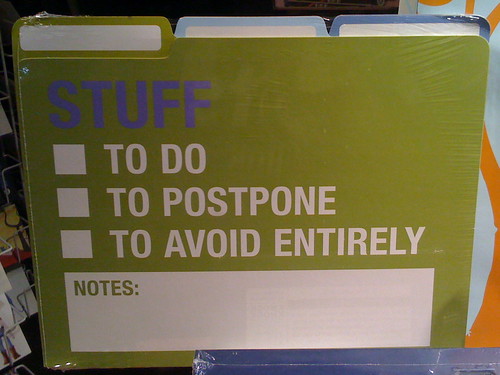
Could forgiveness be the cure to procrastination?
s: The key finding was that students who'd forgiven themselves for their initial bout of procrastination subsequently showed less negative affect in the intermediate period between exams and were less likely to procrastinate before the second round of exams. Crucially, self-forgiveness wasn't related to performance in the first set of exams but it did predict better performance in the second set. 'Forgiveness allows the individual to move past maladaptive behaviour and focus on the upcoming examination without the burden of…
1 min read

Does gossip make us less selfish?
a Science Daily: In every condition, people acted selfishly to some degree -- most people kept more than an equal share for themselves. But when their actions were public and the chance for gossip was high, people became substantially less selfish. When people knew that their selfishness would be on display -- and very likely to be talked about -- they acted most generously to others. "When the threat of gossip exists, group members can expect that they will be…
1 min read

A Quick And Easy Way To Make Yourself Tougher
and up straight. Via Eurekalert: ...poor posture not only makes a bad impression, but can actually make you physically weaker. According to a study by Scott Wiltermuth, assistant professor of management organization at the USC Marshall School of Business, and Vanessa K. Bohns, postdoctoral fellow at the J.L. Rotman School of Management at the University of Toronto, adopting dominant versus submissive postures actually decreases your sensitivity to pain. And: ...their research suggests that curling up into a ball may make…
1 min read

A Quick, Easy Trick For Getting People To Like You
socially optimistic. Expect that people will like you and they probably will. Via Psyblog: So this provides evidence that the acceptance prophecy holds true. In this experiment people who expected to be accepted did act more warmly towards a stranger and consequently they were perceived as more likeable. And: Social optimists, of course, are in the happy position of expecting to be accepted and finding that, generally speaking, they are. Social pessimists, though, face the dark side of what…
1 min read
