
Are attractive people more selfish?
a Elsevier: New research suggests that people with symmetrical facial features tend to be selfish and are less likely to cooperate with others. Facial symmetry is believed to have a large hand in how people perceive aesthetic beauty and physical attractiveness. The study, published in the journal Economics and Human Biology and compiled by Edinburgh University researchers, claims that attractive people are not only selfish by nature, but also more self-sufficient. They are less likely to ask for help, which kind of…
1 min read

Is it better to start off with ambitious goals or conservative goals?
a Eurekalert: Consumers who set ambitious goals have a greater level of satisfaction compared to those who set conservative goals, according to a recently published paper by the Cecile K. Cho, a University of California, Riverside assistant marketing professor. Cho and her co-author and Gita Venkataramani Johar, a professor at Columbia University, set up two experiments to compare people who set ambitious goals to those who set conservative goals. They focused on situations in which goals were achieved, and measured…
1 min read

What are the first words you should say in a negotiation?
mething very similar to what the guy on the other side of the table just said: We hypothesized that in online, virtual formats, negotiators receive better outcomes when mimicking their counterpart's language; furthermore, we predicted that this strategy would be more effective when occurring early in the negotiation rather than at the end, and should also be effective across both independent and interdependent cultures. Results from two experiments supported these hypotheses. Experiment 1 was conducted in Thailand and demonstrated that…
1 min read

Is compassion the key to creativity?
you tend to be hard on yourself, being less critical can make you more creative: Self-compassion is a multifaceted state of potential utility in alleviating the self-critical tendencies that may undermine creative expressions among certain individuals. To investigate this idea, 86 undergraduates were randomly assigned to control or self-compassion conditions, following which creative originality was assessed by a version of the Torrance Test of Creative Thinking (TTCT). The manipulation was hypothesized to facilitate creative originality particularly among individuals who…
1 min read
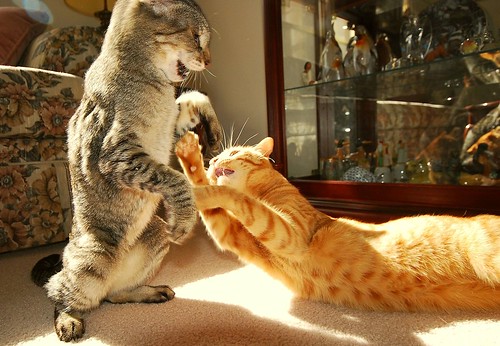
Can being antisocial be an advantage?
r programmers and tennis players, yes: Attachment-related avoidance and anxiety have repeatedly been associated with poorer adjustment in various social, emotional, and behavioral domains. We examined two domains in which avoidant individuals might be better equipped than their less avoidant peers to succeed and be satisfied – professional singles tennis and computer science. These fields may reward self-reliance, independence, and the ability to work without proximal social support from loved ones. In Study 1, we followed 58 professional singles tennis…
1 min read
What’s Dan Ariely’s trick for beating procrastination?
n Ariely, author of the excellent Predictably Irrational, The Hidden Forces That Shape Our Decisions gives us this tip: Join over 140,000 readers. Get a free weekly update via email here. Related posts: How to beat procrastination quickly Is there a way to reduce procrastination in the workplace? Could forgiveness be the cure to procrastination?
1 min read

Is it better to settle?
maximizer is someone who researches, comparison shops and works hard to make sure they get the absolute very best. A satisficer is someone who is happy with good enough. Many of us are maximizers about some things and satisficers about others. Which is the better strategy? Maximizing may give better objective results -- but makes us unhappier in the end: Although extant research suggests maximizing is related to objectively positive outcomes (e.g., job offers), I propose maximizing may be…
2 minutes
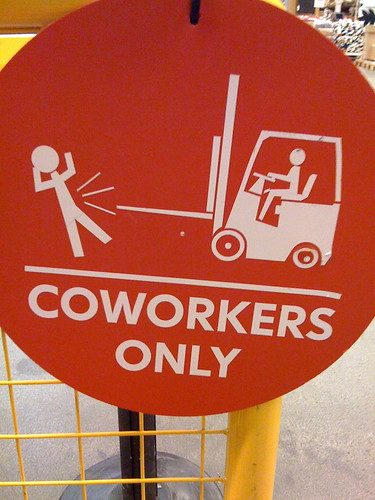
Do you need to be friends with the people you work with?
you want to get promoted, yes: Employees who are the most unwilling to develop workplace friendships seem to be the least likely to be promoted, according to research by Shawn Achor, author of The Happiness Advantage. In a blog post on HBR.org, he says he divided employees into quartiles on the basis of their willingness to initiate work relationships, such as by inviting coworkers out for drinks. Just 5% of the bottom quartile were extremely engaged in their work, and just 7% had been…
2 minutes
