
Is win-win negotiating the best way to increase your salary?
esn't look like it. This study shows that people who pushed for the highest amount -- purely out of self-interest -- came away with the highest number: Via Strategy+Business (HT: PsyBlog): Not surprisingly, the biggest salary increases went to those who negotiated in the most competitive manner, acting purely out of self-interest. This could mean trying to use a job offer from another firm as leverage or even misrepresenting some facts. This type of negotiation often left both sides feeling…
1 min read
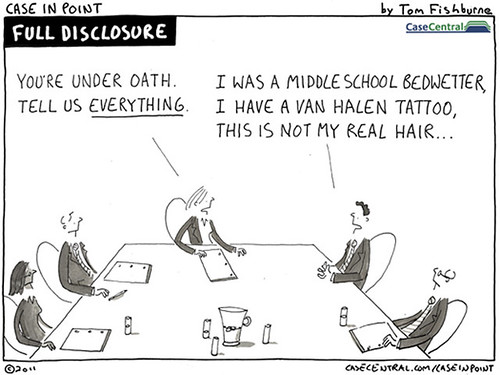
Does “full disclosure” really address conflicts of interest?
tually, it may make things even worse. Via Boston.com: Disclosure doesn’t solve problems the way we think it does, and in fact it can actually backfire. Coming clean about conflicts of interest, they find, can promote less ethical behavior by advisers. And though most of us assume we’d cast a skeptical eye on advice from a doctor, stockbroker, or politician with a personal stake in our decision, disclosure about conflicts may actually lead us to make worse choices. “None of…
2 minutes

How You Can Quickly And Easily Increase Confidence And Reduce Anxiety
lk to yourself: Objectives The present study examined the effects of motivational self-talk on self-confidence, anxiety, and task performance in young athletes. Methods Participants were 72 tennis players. The experiment was conducted in five sessions: baseline assessment, three training sessions, and final assessment. After the baseline assessment participants were divided and assigned randomly into experimental and control groups. The two groups followed the same training program with the experimental group practicing the use of self-talk. In the last session, the…
1 min read
Do you underestimate the power of touching?
a the New York Times: Studies show touching has the power to encourage, reduce pain and communicate: Students who received a supportive touch on the back or arm from a teacher were nearly twice as likely to volunteer in class as those who did not, studies have found. A sympathetic touch from a doctor leaves people with the impression that the visit lasted twice as long, compared with estimates from people who were untouched. Research by Tiffany Field of the…
2 minutes
What tricks do stores use to get us to buy?
is is from an interview with Lee Eisenberg, author of Shoptimism: Why the American Consumer Will Keep on Buying No Matter What. Join over 190,000 readers. Get a free weekly update via email here. Related posts: How To Stop Being Lazy And Get More Done – 5 Expert Tips How To Get People To Like You: 7 Ways From An FBI Behavior Expert New Harvard Research Reveals A Fun Way To Be More Successful
1 min read
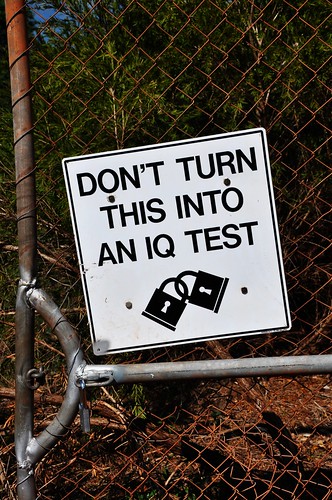
How To Instantly Get Smarter
tting people to think about professors (or other stereotypically smart groups) improved their smarts for 15 minutes. The reverse was true too: getting people to think about stereotypically stupid people reduced performance. The authors tested and confirmed the hypothesis that priming a stereotype or trait leads to complex overt behavior in line with this activated stereotype or trait. Specifically, 4 experiments established that priming the stereotype of professors or the trait intelligent enhanced participants' performance on a scale measuring general…
1 min read

Can computers teach us everything we need to know about cooperation?
ve posted before about Robert Axelrod's research on cooperation; computers were assigned different strategies in the famous prisoner's dilemma and for thousands upon thousands of rounds they faced each other to see which method led to the most success. The best strategy by far turned out to be one we're all familiar with: tit-for-tat. In chapter six of his book, The Evolution of Cooperation, Axelrod explains how we can translate the findings of these computer tournaments into advice that's useful…
3 minutes

Is 5-to-1 the golden ratio for both work and romantic relationships?
om Richard Conniff's interesting book, The Ape in the Corner Office: How to Make Friends, Win Fights and Work Smarter by Understanding Human Nature: It turned out that the fifteen high-performance teams averaged 5.6 positive interactions for every negative one. The nineteen low-performance teams racked up a positive/negative ratio of just .363. That is, they had about three negative interactions for every positive one... And: What's even scarier is that Losada's five-to-one ratio also appears to be essential when you…
1 min read
