
“Nice guys finish last.” Really? What does the research say?
ice guys finish last." Is it true? To some degree it depends on what area of life we're talking about. Let's see what the research has to say... Money Nice guys finish last here. More agreeable people make less money: ...men who measured below average on agreeableness earned about 18% more—or $9,772 more annually in their sample—than nicer guys. Ruder women, meanwhile, earned about 5% or $1,828 more than their agreeable counterparts. “Nice guys are getting the shaft,” says study co-author…
4 minutes
Life Lessons – Cornell researcher Karl Pillemer explains the most important things older people insist you need to know
bsp; What life lessons can we learn from the people who have lived the longest? Karl Pillemer of Cornell University interviewed 1200 people age 70 to 100+ for his book “30 Lessons for Living: Tried and True Advice from the Wisest Americans” asking them: "If you look back over the course of your life, what are the most important lessons you learned that you would like to share with younger people?" I've posted about Karl's research a number of times…
5 minutes
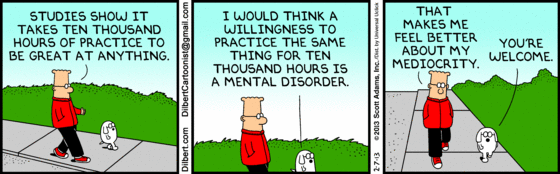
Good Work Habits That Nearly All Geniuses Have In Common
od Work Habits Of Geniuses A very interesting new book, Daily Rituals: How Artists Work, examines the good work habits of over 150 of the greatest writers, artists and scientists. What does nearly every genius have in common? Those interested in the 10,000 hour theory of deliberate practice won't be surprised -- the vast majority of them were complete and unapologetic workaholics. Via Daily Rituals: How Artists Work: William Faulkner: During his most fertile years, from the late 1920s through the early…
4 minutes
Advice on how to make better decisions — tailored just for you (courtesy of Sherlock Holmes)
ve posted a lot of expert advice on how to improve decision making. But how can you get custom advice, tailored just for you? It's easy. Start a decision diary. Record what decisions you make and how they turn out. Over time you'll have a blueprint for what works for you -- and what doesn't. Via Mastermind: How to Think Like Sherlock Holmes: When we make a choice, solve a problem, come to a decision, we can record the process in…
3 minutes

10 tips to increase your productivity:
d you know double tapping the space bar on your smartphone will automatically enter a period and add a space to make ending a sentence easy? I didn't. In this TED Talk, David Pogue gives 10 quick technology tips that will increase your productivity. Frankly, I was embarrassed that I didn't know many of these. Pogue is a technology columnist for the New York Times and author of more than 60 books. Join 25K+ readers. Get a free weekly update via…
1 min read
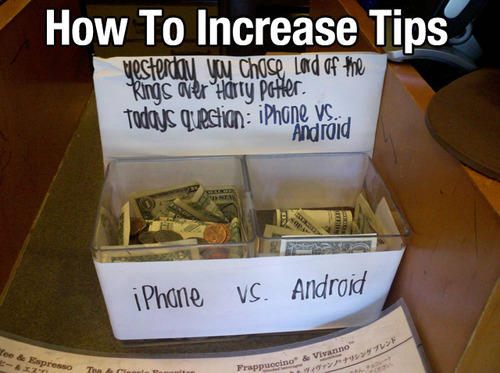
Six quick and easy ways to boost your creativity:
e WSJ has a piece that discusses six research-backed ways to provoke an "AHA!" moment. I'll link out to more information on each. What do most of the techniques share in common? Stepping back from the problem in one way or another. I've posted before about how distance helps creativity. 1) Do Routine Tasks "Walking away from a problem to do simple, routine tasks, and letting the mind wander in the process, can spark creative new connections or approaches…
2 minutes
4 things that will make you more motivated, happy and creative at work:
rvard's Teresa Amabile gave office workers something very simple: diaries. Then she reviewed their ups and downs and drew connections. What she learned was extraordinary. She described the study in her book The Progress Principle: Using Small Wins to Ignite Joy, Engagement, and Creativity at Work. Here are four of the biggest things she learned: 1) Progress Motivates You More Than Anything Else Nothing is more motivating than progress in meaningful work and nothing more taxing than setbacks. Via The Progress Principle: Using…
5 minutes
9 Expert Insights That Will Make You Productive, Successful And Smart
pert Tip #1: How To Be More Creative Your first idea is rarely the best. Always keep pushing and generate more possibilities. Advice from Andrew Goldberg, writer on Family Guy: I’m a big fan of writing "alts" (versions). If I come to a joke spot, even if I’m working on my own stuff, I’ll often write three or four or five different alts, and then I’ll show it to friends, show it to my wife, show it to my manager, show…
7 minutes
