How To Deal With Life’s Toughest Moments: 5 Secrets From Research
.
Something happened. Maybe somebody died. Or a relationship collapsed. A friend betrayed you, or somebody vanished without explaining why. The event’s over. But your feelings, well, they’re refusing to respect the calendar.
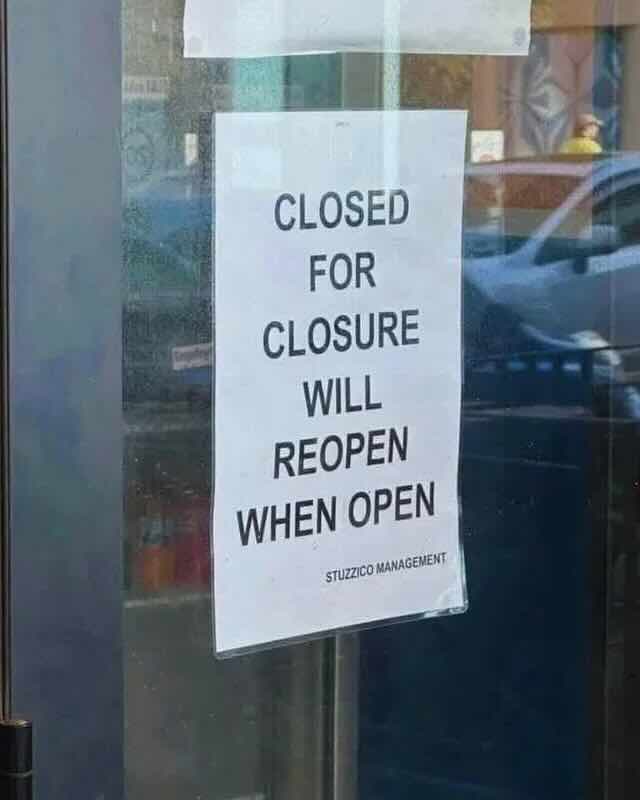
What you need, everybody will immediately explain, is “closure.”
They mean well. They want you to stop hurting. So they reach for a word that sounds like a solution. Closure. Once you’ve achieved closure, apparently, the questions stop and the pain recedes.
And wouldn’t that be nice? Man, I’d love for grief to have the sharp finality of closure. I want a certificate reading “CONGRATULATIONS, YOU ARE NOW OVER IT.”
Here’s the question: Is closure even real? Essential? What, exactly, are we being promised when we’re promised closure?
We’re gonna get to the bottom of this. You may not like everything you’re about to hear. But we need some honesty because this stuff is serious.
Don’t worry; there will be good news too. We’re gonna cover all of it. Including, for reasons that will shortly become defensible… Ross and Rachel.
This time we’ll be drawing from “Closure” by sociologist Nancy Berns.
Let’s get to it…
Closure Is Only Decades Old
Human beings have been splitting up, burying parents, and dealing with all manner of awfulness for a very long time. Grief might be ancient, but the insistence that we require closure is quite recent.
In fact, it only hit the mainstream in 1995 when it was mentioned on the sitcom “Friends.”
Rachel drunkenly leaves Ross a message announcing that she’s over him and has achieved closure. (I get it. I, too, would like certain people to receive regular updates about my indifference.) The joke is that she’s obviously still attached. And there’s a whole lot more closure irony to come, rest assured…
Where did closure come from originally? Gestalt psychology. In 1923, Max Wertheimer used the term to describe the brain’s tendency to perceive an incomplete image as a complete one. Fine. Interesting. My brain can finish drawing a shape. I would prefer it finish recalling the password I created two minutes ago, but congratulations on the shape.
A finding about how we perceive objects isn’t very good evidence that grief has a finish line. Hold on, it gets worse…
Nobody even agrees on what closure means.
Berns identifies six definitions people use: closing a chapter and moving on, remembering and never forgetting, forgetting and erasing reminders, getting even through revenge, getting answers to haunting questions, and confessing or forgiving.
In case you’re skimming: those definitions contradict each other. They could start a fistfight in a support group. The concept of closure is so broad it can be used to describe both a wedding and an airstrike.
The relief people call closure, yeah, that can be real. The questionable part is the idea that everybody needs to reach one huge emotional endpoint before they can get back to living.
So what should you do if you still want closure?
You need to define it for yourself. Next time you’re struggling with grief, ask: “What specifically am I hoping will change?”
Write down the answer. And don’t you dare write the answer that sounds best in therapy. Write the one you’d be horrified to see projected behind you at work. An honest answer.
Now you’ve got something you can actually poke at. Is achieving this possible? Is it under your control? Would it really help? Is there another route to the same result?
Sometimes the thing you want is impossible. The person is gone. Or they won’t answer. That hurts, especially when you’ve been told this is the only thing that will make you feel better.
And that’s why being told “closure is essential” can be so terrible. You’ve already lost something important. You deserve help with the loss, not another chance to feel you’re doing life wrong.
(To learn the 6 secrets to becoming more resilient, click here.)
So closure isn’t all it’s cracked up to be. But you still need help. Unfortunately, that’s often harder to come by than you think…
Pick Your Grief Experts In Advance
Loss is one of the catastrophes for which society provides support lasting almost three whole afternoons.
At first, everyone rallies around. There are offers to help with “anything.” After all, those are the rules. Of course, there are rules for the grieving person, too. Sociologist Arlie Hochschild calls them “feeling rules”: the invisible instructions we absorb from society telling us what we’re supposed to feel and do in a situation.
A familiar grief script these days is: suffer a loss, be shattered, perform relevant rituals, learn something profound, obtain closure, and move on.
But if sorrow persists, UH-OH. You’ve violated The Socially Acceptable Half-Life of Grief. At first, you were a sympathetic figure. Now, frankly… you’re making it weird. Prolonged sorrow ruins pleasant evenings and reminds people that everybody they love is temporarily assembled meat.
You learn that every honest conversation can carry a social penalty. So you stop mentioning it. Everyone sees this and thinks: Great, they’re over it.
No. You’ve discovered that telling them the truth makes them fidget. Over time, the circle of people you allow to see the grief shrinks. Until you’re left with one trusted person. Or nobody.
This creates a vicious circle. Because ongoing grief is hidden, nobody sees how common it is. Because nobody sees it, everybody assumes grief is short. That assumption pressures the next grieving person to hide. And on it goes.
I don’t mean to diminish the kindness of others here. There are people whose presence during those first days you’ll remember for the rest of your life. Your pain hurts them. They may have no idea how to stay close to it without feeling responsible for making it stop.
So choose your “grief experts” now. Before disaster strikes.
Decide in advance whose guidance you respect. Who can give you the kind of support you need. Maybe a therapist or a close friend. Pick somebody who’s proven they’ll keep showing up after it stops being interesting. You’ll need them one day.
(To learn how to have a resilient family, click here.)
But what if the tragedy is something somebody did to you and now you want revenge? Totally understandable. They hurt you and you’d like to introduce them to a few consequences.
We love the idea of revenge because it has the commonsense appeal of many things that just don’t work…
Don’t Count On Revenge For Closure
An entire economy’s been built around mock vengeance after divorce. People are selling ex-shaped voodoo dolls and throwing divorce parties where you drink margaritas while friends batter an effigy of Phil.
This is all based on catharsis theory. You know, “Get the anger out.” The problem here?
Catharsis theory has no scientific support. Social psychologists have repeatedly found that venting aggression doesn’t drain rage. It feeds it. People encouraged to hit things when angry become (surprise) angrier.
In a series of experiments, people who punished an offender kept thinking about that person more than those who did not punish. Revenge keeps the grievance alive. You wanted an ending but accidentally renewed this terrible show for another season.
So before retaliating, ask yourself: “Will this reduce the person’s role in my life or continue focusing my attention on them?”
You want a life where the offender becomes less relevant.
(To learn the 5 secrets to overcoming anger, click here.)
But what if you’re dealing with the most extreme kind of grief? Someone you love dies. What should you do then?
Imagine Frames Beyond Closure
When somebody passes away, we’re told that the healthy thing is to detach.
But people rarely heal by deleting the dead from their lives. They heal by finding a different way to relate to them. And in the 1990s, psychologists finally figured this out, and the detachment model gave way to what bereavement scholars call “continuing bonds.”
No, this doesn’t mean you believe the dead person is living secretly in your garage. You understand they’re gone. But instead of treating grief as an emotional extermination project, continuing bonds theory recognizes that a relationship can survive in a changed form.
They’re still a part of your life, but they no longer actively participate or respond. (Many workplace teams have members like this.)
Ask yourself, “What form can this relationship take now?”
Maybe they’re still a part of your life because of something they taught you. Or maybe you still ask, “What advice would they give me on my current predicament?” Whatever form it might take, a continuing bond is a way of saying, “They’re dead, but they still matter.”
(To learn the 4 secrets to recovering from tragedy, click here.)
“Eric, we’re going to activate your pain collar if you don’t say something truly hopeful.”
Okay, okay. I have good news, I swear…
You Can Carry Grief And Joy At The Same Time
The worst part about “closure” is that it implies grief and joy are sequential. You can’t begin enjoying life again until grief has finished whatever complicated bowel movement it’s having.
Wrong. Grief and joy can coexist. In fact, they usually do. (Humans are pretty much incapable of maintaining emotional consistency for more than forty-five minutes.)
After a tragedy, you sometimes catch yourself enjoying something and feel guilty. But it’s not disloyal to briefly forget how much it hurts. You’re allowed to enjoy a life you would change if you could.
Psychiatrist Frank Ochberg says, “Closure is a myth, but progress is not.”
After a major loss, add some low-pressure sources of pleasure to your life without demanding they produce magical results. Recovery is often the growing capacity to contain contradictory emotions, not the coup-de-grace-final-triumphant-victory of one emotion over another.
Ask yourself, “What would make the next month a little more pleasant?”
Judge your recovery by expansion. Grief might still be there. But start noticing how much life you can feel alongside it.
(To learn how to stay happy, click here.)
Okay, we’ve covered a lot. Time to round it all up and discuss the part everyone leaves out. The thing that can help make tragedy easier for everyone…
Sum Up
Here’s how to deal with life’s toughest moments…
- Closure Is Only Decades Old: The notion that humanity has been grieving incorrectly for thousands of years should immediately spark skepticism.
- Pick Your Grief Experts In Advance: The Statute of Limitations on Sadness is short. Know in advance who you trust to be there for you.
- Don’t Count On Revenge For Closure: You are not Liam Neeson in “Taken.” And it probably wouldn’t make you feel better anyway.
- Imagine Frames Beyond Closure: Try continuing bonds. “Gone” is not the same as “irrelevant.”
- You Can Carry Grief And Joy At The Same Time: If I had to resolve every feeling before experiencing the next one, I’d still be processing an insult from seventh grade. You’re allowed to feel good even when you’re feeling bad.
So much for your closure. What about everybody else’s? (Apparently, other people also have interior lives, which is inconsiderate given how much supervision mine requires.)
What should you do for someone who’s grieving?
Be the person who stays.
Be emotionally available for longer than one billing cycle. Call after six months, after everybody else assumes the emergency is over. Don’t panic if they cry, and don’t conclude that the grief’s gone if they laugh.
The real test is what happens when they tell you the same story about their breakup for the seventh time and you’ve already nodded at all the appropriate moments. Try to be patient. Listen to it again. And without checking your phone under the table.
You don’t have to say anything brilliant. Just keep listening. You can’t finish somebody else’s grief for them. But you can make sure they don’t have to hide it from you. And that means a lot more than you might think.
We’ve spent millions of years becoming creatures capable of loving people so deeply that their absence changes the shape of our lives.
It was always overly optimistic to imagine we could sort the whole thing out by drunk-dialing David Schwimmer.


